Bayer Luna Experience Fungicide — a practical guide and field notes

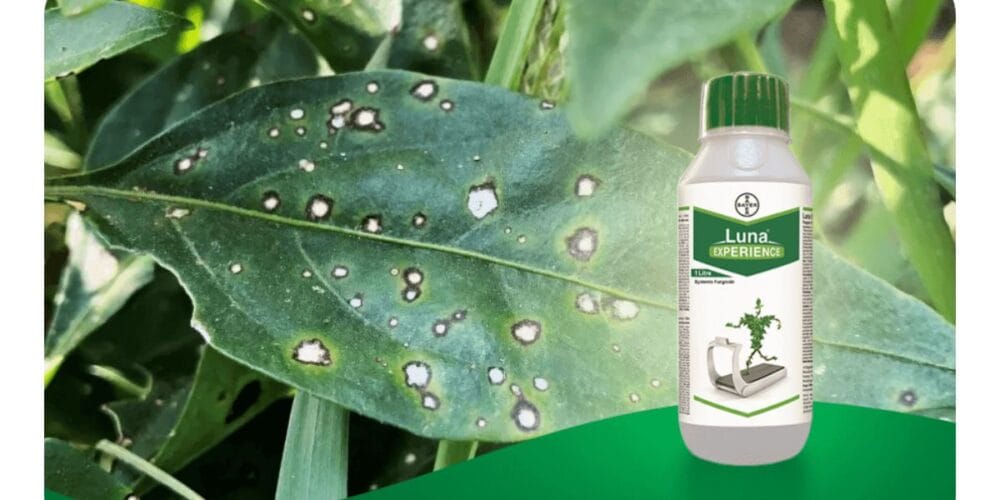
Introduction of Bayer Luna Experience Fungicide
Bayer’s Luna Experience has quickly become a favourite among growers who want broad-spectrum, reliable fungal control with a tank-friendly formulation. Below I’ll break down the technical name, recommended dosages (per litre and per acre), major uses, and the benefits farmers see in the field — written in a clear, SEO-friendly format so you can drop it straight into a blog or advisory leaflet.
Table of Contents
What is Luna Experience? (Technical name)
Technical name / active ingredients: Fluopyram 200 + Tebuconazole 200 SC (17.7% w/w + 17.7% w/w) (suspension concentrate).
This is a dual-action systemic fungicide: fluopyram is an SDHI (it interferes with fungal respiration) while tebuconazole is a triazole that interferes with ergosterol synthesis in fungal cell membranes. The two act together to provide both curative and protective activity.
General formulation and mode of action
Luna Experience is formulated as an SC (suspension concentrate) for foliar application. Because it combines two modes of action, it reduces the chance of resistance development when used in a responsible rotation program and gives good translaminar/systemic coverage.
Also Read: Bayer Antracol Fungicide: A Complete Guide for Farmers

Recommended dosage — quick summary
- Dose per litre (typical foliar spray): 0.75–1.0 ml per litre of water is the common recommendation for many vegetables and field crops (this gives a good starting spray concentration). For some crops/target diseases label directions allow slightly higher ml/L rates — check crop-specific label recommendations.
- Dose per acre (typical dilution volumes): 150–220 ml per 200 litres of water per acre is commonly quoted; typical practical ranges used by retailers and extension sources are 150–200 ml/200 L/acre, with a few crops (or high disease pressure) listed up to ~220–225 ml/200 L. Always follow the label rate for that crop.
(Why ranges? Different crops, spray equipment and target diseases change the recommended total dose per treated area — always follow the registered label for the crop and consult local extension if in doubt.)
Also Read: Bayer Buonos Fungicide: A Complete Guide for Farmers
Crop uses and target diseases
Luna Experience is registered and widely used on a range of fruits, vegetables and field crops. Typical crops and targets include:
- Grapes — powdery mildew, anthracnose.
- Chilli / pepper — powdery mildew, anthracnose and fruit rots.
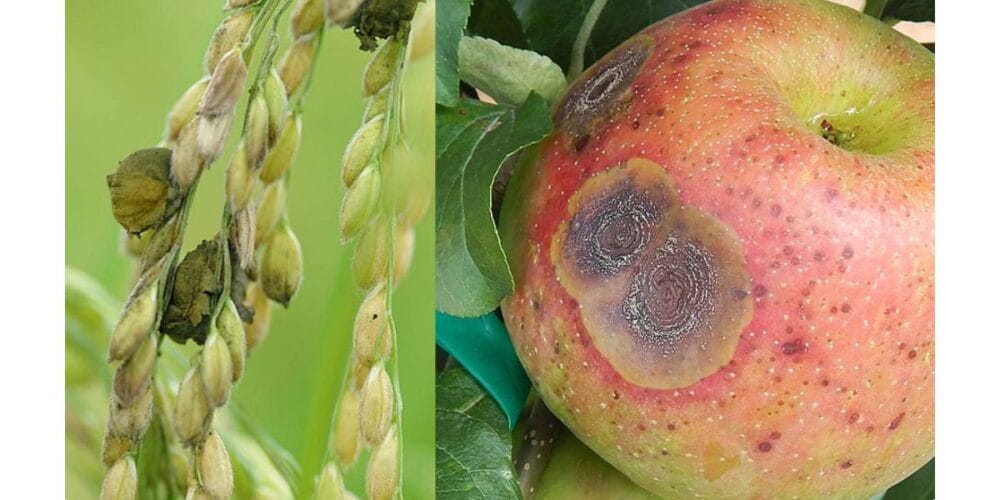
- Apple — scab, leaf blotches, fruit rots.
- Onion — neck rot and other storage/foliar diseases.
- Rice / paddy — diseases such as false smut and dirty panicle (in certain regions/label registrations).
Many product pages and the manufacturer information list similar target diseases — always confirm with your national label for permitted crops and timings. - Benefits growers report
- Broad-spectrum control: The dual actives give both preventative and curative activity against major foliar and fruit diseases.
- Improved fruit/market quality: By protecting fruit from blemishes and rot, growers often see better pack-out and higher prices at market.
- Good rainfastness and systemic activity: The systemic uptake helps protect new growth and reduce reapplication frequency when used at the correct timings.
- Resistance management option: Because it pairs an SDHI with a triazole, it can be a useful component of a rotation or mixture strategy to manage resistant pathogen populations — but it should still be used according to resistance-management guidelines.
Practical tips for application
- Mix thoroughly and spray uniformly; SC formulations settle if left standing.
- Use the lowest effective labelled rate matched to crop and disease pressure. A common practical spray is 150–200 ml mixed into 200 L water per acre (roughly 0.75–1 ml/L) for routine protective sprays; increase to label-permitted higher rates only where specified.
- Observe pre-harvest interval (PHI) and re-entry intervals on the label for your crop. Labels list withholding periods for each registered crop — consult the product label for exact days and safety precautions.
Safety & stewardship (short)
Wear appropriate PPE during mixing and application, avoid spraying during windy conditions, and don’t exceed label rates. Rotate modes of action in-season (and across seasons) as part of an integrated disease-management program to preserve fungicide effectiveness.
Also Read: Bayer EverGol® Xtend — advanced seed-treatment fungicide (≈800 words)
Final opinion
Luna Experience is a modern, flexible tool for growers — its combination of fluopyram + tebuconazole gives powerful control across many crops and diseases while fitting into resistance-management plans when used responsibly. For best results, match the dose to the crop, follow the label instructions for ml/L and ml/acre, and combine chemical control with cultural and monitoring strategies.
Also Read: About Luna Experience Fungicide on the BAYER Site
Bayer Luna Fungicide review
Product Cost
Compatibility
Availability
Agregate Customer Score
Overall Rating: Excellent